Snow Selkies, a Wikipedia entry
Snow Selkies is part of These Wilds: Owl Light Literary No. 2
available HERE and at regional bookstores.
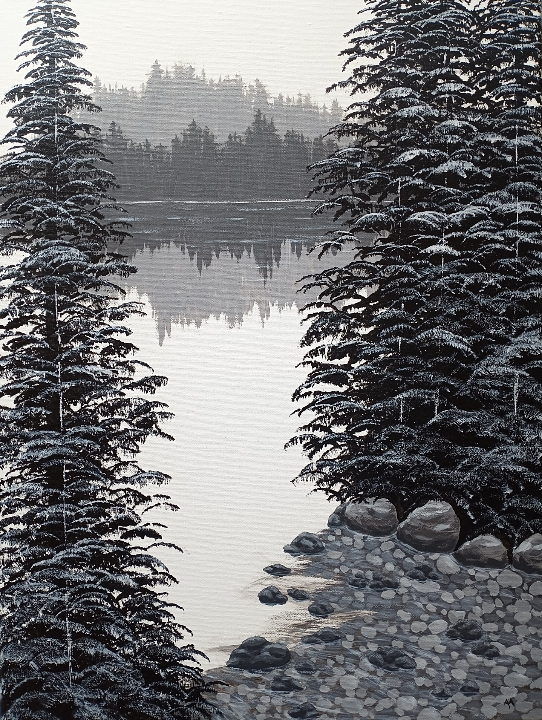
Snow Selkies, a Wikipedia entry
- NICOLE HEBDON
Snow Selkies, known also as Saranac Selkies, are a species of supernatural, anthropomorphic snow only found by bodies of water in New York State. Like the selkies of Norse and Celtic mythology, Snow Selkies change between two forms, women and snow. Unlike traditional selkies, Snow Selkies are born human and live happily as humans for decades, usually not transforming into a selkie until their mid-thirties or later. After transforming, they remain a selkie for the winter, and then return to a human after the snow melts with no permanent changes. They may become a selkie the next and all proceeding winters, or it may be a one-time occurrence. In all recorded cases except one, the Snow Selkie was a wife and mother. In all recorded cases except one, prior to transformation, the Snow Selkie was diagnosed with an incurable illness when in human form and her time as a selkie either cured her or greatly increased her life expectancy.
Description
Snow Selkies are made almost completely of snow, just their hands and face remain flesh. The snow may appear to be clinging to their bodies, as some human features are still visible beneath it, but the bodies actually become snow. Nasiolabial folds, jowls, and perioral mounds all become accentuated when a woman transforms into a Snow Selkie, which gives them the appearance of a muzzle. Scars, stretchmarks, birthmarks and tattoos are highlighted by the cold. Outlined in cold pink skin they seem to glow beneath the snow, and markings that before were inconsequential will take on new life.
A man who lived with his wife on Lime Lake in Cattaraugus said that the moles and birthmarks his wife always had suddenly looked like a map of the Great Lakes. A man from Thousands Islands said that his wife’s stretch marks turned silver and took on the appearance of an ancient language. It is common for abandoned husbands to comment on their wives’ scars looking like jewelry or other adornments when she is a selkie.
Habitat
Snow Selkies are found exclusively in New York State and have been reported in Lime Lake in Machias, Lake Erie in Buffalo, Lake Champlain in Plattsburgh, Saranac Lake in Saranac, Silver Lake in Perry, The St Lawrence River in Thousand Islands, The Genesee River in Letchworth, and Rockaway Beach in Queens. Each year there are more sightings and their habitat expands.
Discovery
Joseph from Buffalo reports he was ice fishing with his wife Katrina. It was her first time coming with him. She had recently been diagnosed and they were since inseparable. They planned and failed to tell their children about the health scare at New Years, but their granddaughter announced she was pregnant at the party. It would be their first greatgrandchild. Katrina was inconsolable, a baby she would never meet or hold. Joseph too couldn’t get excited. It felt like a trade, his Katrina with her long hair, now a lovely grey like rabbit fur for a baby that wouldn’t even like him. He thought of his own great-grandparents who died when was in grade school. He hardly had any memories of those crabby withered people and he didn’t recognize himself in them. He wished, though he knew it was wrong, that he could trade the baby for his wife. As soon as he thought this, she fell to the ice, a bundle of blankets and winter clothing. He went to lift her, but before she was upright, he felt the fabric go limp, and she was gone. Dazed, he looked into his ice hole and then went to his neighbor’s tent to look down theirs. The sickness had made her small. Maybe she had fallen into one. The police were called, so when they found her two hours later, on the banks, wearing a dress of fluffy, opaque snow, it was recorded in official documents. The men chased her, but she crumbled beneath their touch and went fur-ther away. Everyone gave up, except Joseph; he followed her all winter, photographing her form a distance. His wife acted as if she didn’t know him and when he called out to her, she responded in yelps. She spent her days walking and swimming until February when other women dressed like her appeared. They communed. They slept in omniscient heaps that slid away on the ice when anyone got close. Mid-March when the snow stopped, the women melted into one greasy puddle, but as soon as Joseph approached it, the women sprung up, fully human. When they went to the doctor the next day, Katrina’s cancer was gone. Katrina never returned to her selkie self and died nine years later in her sleep, the night after her great-granddaughter’s birthday.
Exception
The strangest case of Snow Selkie is that of Natalie, a twelve-year-old girl living with single father Charles. She had been diagnosed, but it was early and predicted to be easily treatable. While making a snowman with her father in Letchworth State Park, she vanished and then popped up at Lower Falls.
Charles was delighted, knowing she’d be healed. He visited her, but spent most of his days remodeling her room, making it into something a teen would enjoy for years to come.
He went to her on a warm day, knowing she’d melt. Like other selkies around her, she fell, and their men scrambled to hold them. Charles did the same, but when he touched her, she turned to water in his hands. He tried to cup her, but she slipped through his finger.
Now, Charles spends his days traveling New York, writing travel articles that focus on water destinations. In an interview with News 4 he said, “I’m following her. I know she’s here, running through the water.” At his book launch at the Buffalo History Museum he said, “Every few towns there is a lake or river with houses crowded around it, and tiki bars down the street. It’s human history, crowding around water, building hotels where the big boats came in. I wonder, were these men building the county on the veins of industry actually just looking for their daughters and wives? There had to have been at least one like me, right?”
In every photograph taken of him, he poses with his hands out, like he is trying to catch something.
NICOLE HEBDON
Nicole Hebron’s fiction has been published in The Kenyon Review, The New Haven Review, The New Ohio Review, and The Saranac Review among other places. She is the winner of the 2024 Robert Colley Prize for Fiction and the 2023 Thirty West Publishing micro fiction prize. She is the Director of Literary Arts at the rural nonprofit The Springville Center for the Arts. CLICK to Learn More